
Supply Chain Issues
Companies often struggle with inventory management and supplier relationships, which can disrupt operations.
Supply Chain Challenges
Many organizations face difficulties in managing their supply chains effectively, leading to delays and increased costs.
Metrics for Success
We will track delivery times and inventory turnover rates to measure success.
Find it
Our forward-deployed engineers connect the systems you already run and turn scattered data into one view. Agents then cut thousands of signals down to the few that matter.
Prove it
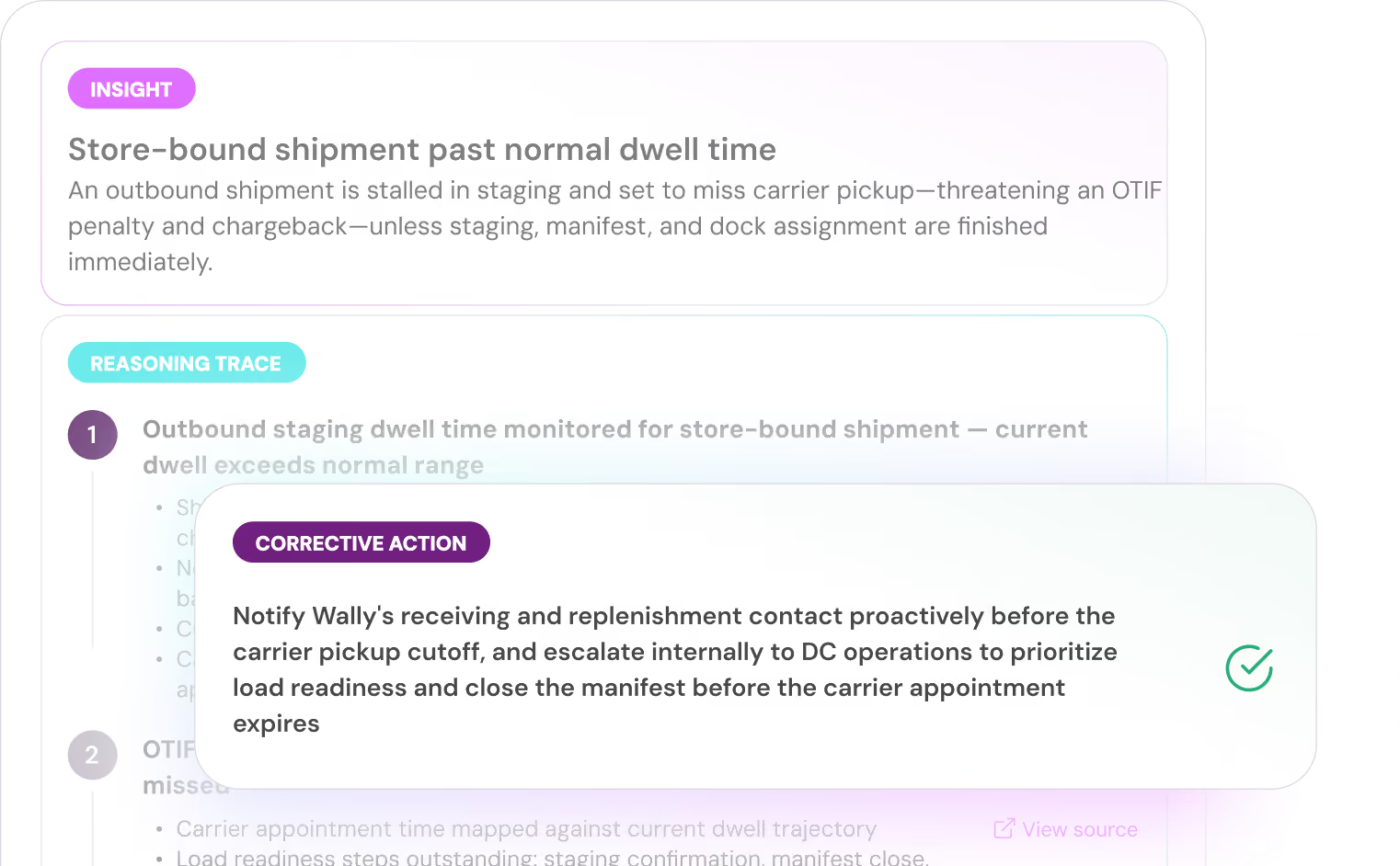
The agent assembles evidence for one failure across systems that never agree, puts a dollar value on it, and shows its reasoning with linked sources.
Fix it
A finding isn't a fix. The agent takes corrective action, and our engineers build it into your existing tools, so the solution is autonomous instead of arriving as another report.
01 Find it
Identifying Supply Chain Gaps
We analyzed the supply chain processes to identify inefficiencies and bottlenecks.
Data Sources
We utilized supply chain data, supplier feedback, and industry reports.
Conclusion of Findings
Recognizing these gaps is essential for optimizing supply chain performance.
02 Prove it
Proving the Solutions
We implemented new supply chain strategies and monitored their effectiveness.
Our findings indicate that better supplier collaboration can enhance efficiency.



03 Fix it
Action Plan
We recommend improving supplier relationships, utilizing technology for inventory management, and streamlining logistics.
Supplier Collaboration

Inventory Management Technology

Logistics Optimization

The Bottom Line
Summary
Optimizing supply chain management has led to reduced costs and improved service levels.

Logistics

Manufacturing