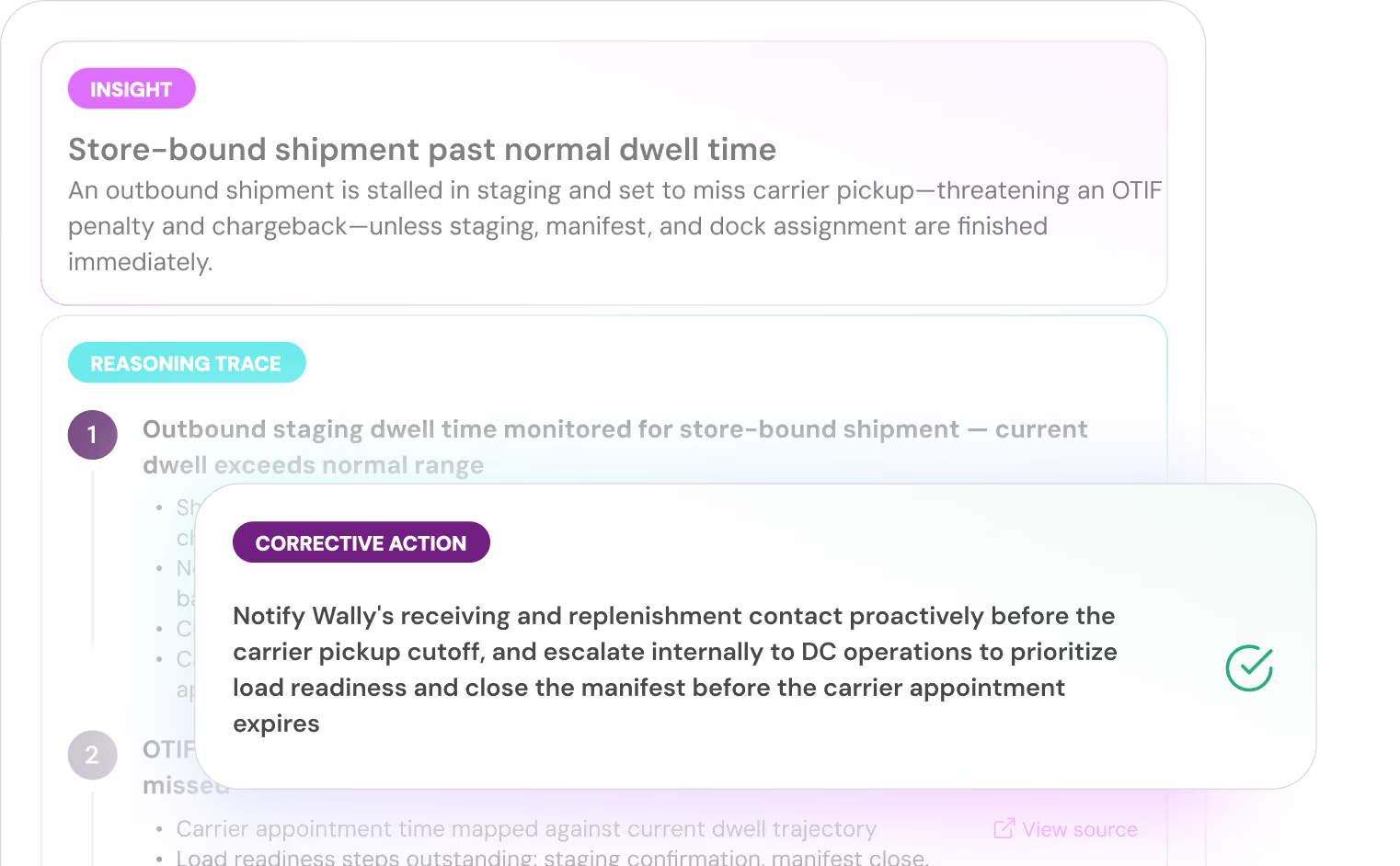
A global automotive parts manufacturer's highest-priority parts run at 91% inventory availability, with no way to tell, at scale, which of several root causes — demand, supply, quality, lifecycle, or flow — is behind each stockout. The 90-day pilot's target is 95% availability on that priority population.
Not enough staff. A supply planning team cannot manually trace every SKU-site-day breach back to one of ten possible causes — demand, supply, quality, lifecycle, or flow — across a catalog this size, so most stockouts go unexplained and get treated with the same blunt fix: more stock.
Disconnected systems. The data that explains a stockout already exists in the ERP, warehouse execution, and planning systems, but it sits in raw source tables that were never modeled into a shape an agent, or a person, can reason over.
91% → 95%
Inventory availability target on highest-priority parts
€6.4M
Projected working capital freed by right-sizing safety stock
90 Days
Headless pilot duration, inside the customer's own environment
Find it
Our forward-deployed engineers connect the systems you already run and turn scattered data into one view. Agents then cut thousands of signals down to the few that matter.
Prove it
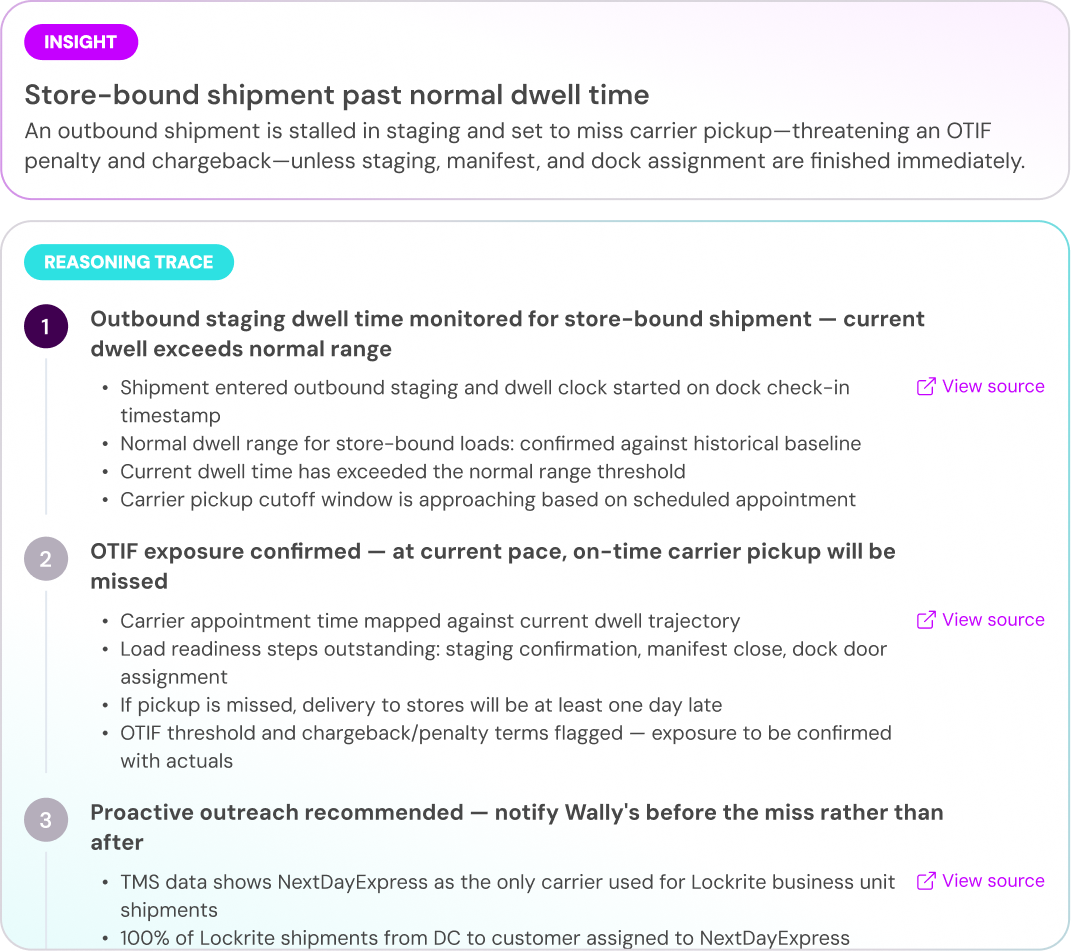
The agent assembles evidence for one failure across systems that never agree, puts a dollar value on it, and shows its reasoning with linked sources.
Fix it
A finding isn't a fix. The agent takes corrective action, and our engineers build it into your existing tools, so the solution is autonomous instead of arriving as another report.
01 Find it
A manufacturer's priority parts were running at 91% availability, and no one could say, case by case, whether the cause was a demand spike, a late supplier, a quality hold, an end-of-life transition, or a flow bottleneck. Each of those causes calls for a different fix, and a different system owner, so misdiagnosing even one in four stockouts means the wrong team spends the wrong effort. The root cause was knowable from data already in the ERP and planning systems; no one had connected it.
Beamup runs a prescriptive root-cause check against every SKU-site combination at risk of a stockout, scoring it against ten demand-side, supply-side, flow-side, and lifecycle-side causes:
- Core ERP – inventory positions, open purchase orders, supplier lead times
- Warehouse execution – receiving, putaway, and fulfillment timestamps
- Planning systems – forecasts, safety stock and reorder point parameters, MOQs
- Non-ERP sources – supplier reliability history, allocation rules
The check runs headless, inside the customer's own cloud environment, so no data leaves their perimeter during the pilot.
A Beamup forward-deployed engineer embeds with the customer's supply planning and IT teams to map the ERP, warehouse, and planning tables into the model the root-cause engine reasons over, and to agree the availability baseline the 90-day pilot measures against.
02 Prove it
A root-cause label is only useful if the team can trust it enough to act on it. Beamup checks are deterministic rather than inferred probabilistically, so each one resolves to a specific data condition — a late PO, a breached reorder point, an open quality hold — that a planner can verify directly in the source system.
That traceability is what lets a planner act on the finding the first time it appears, rather than re-checking it manually before trusting it.
Most root-cause checks are deterministic, and every attribution is traceable to the source data behind it, so each finding holds up under scrutiny before the team acts on it.


03 Fix it
Each root-cause finding resolves to a specific corrective action and a named system of record, so the fix lands with the team that owns it rather than circulating as an open question.
Reset the planning parameter
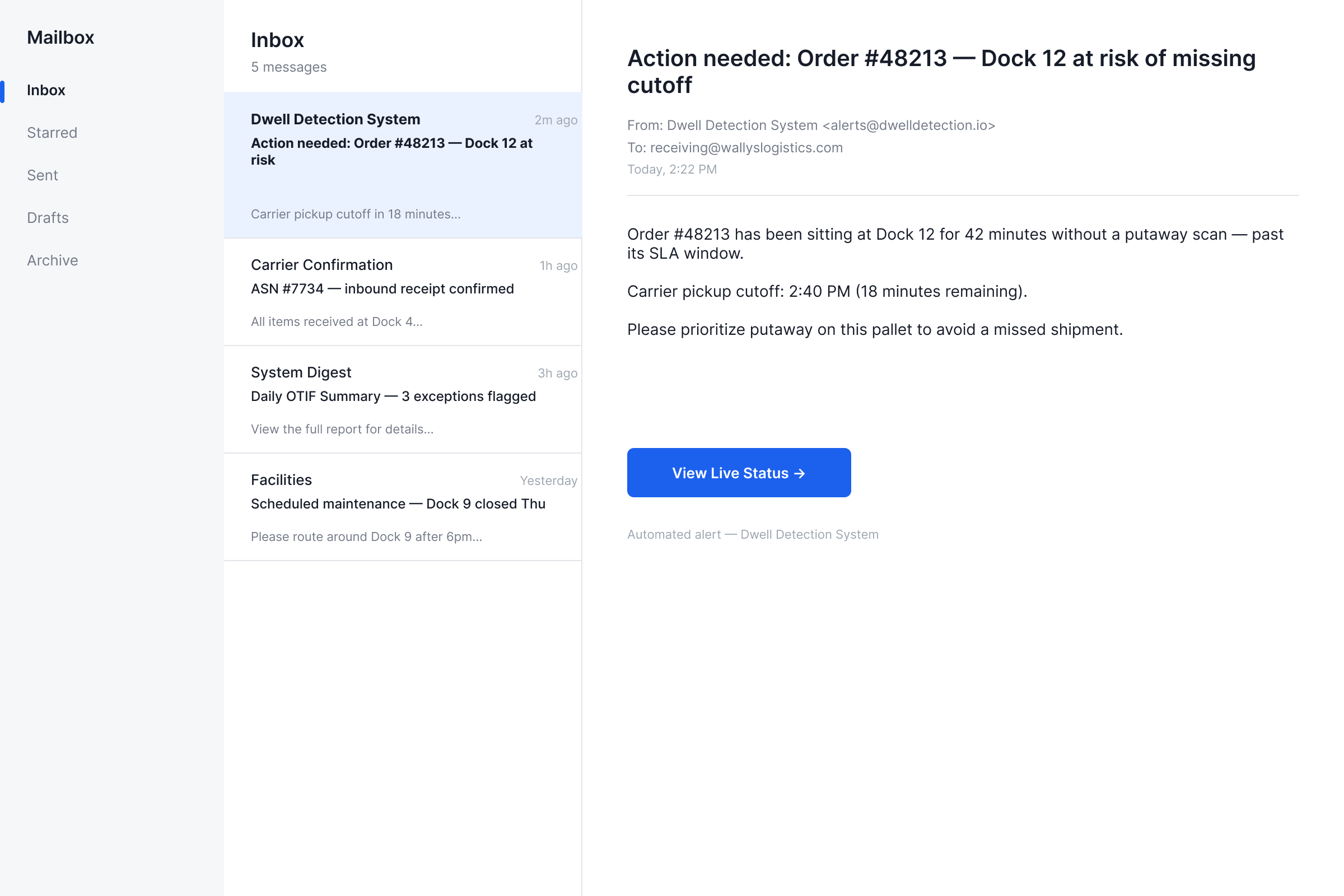
Flag the sourcing gap
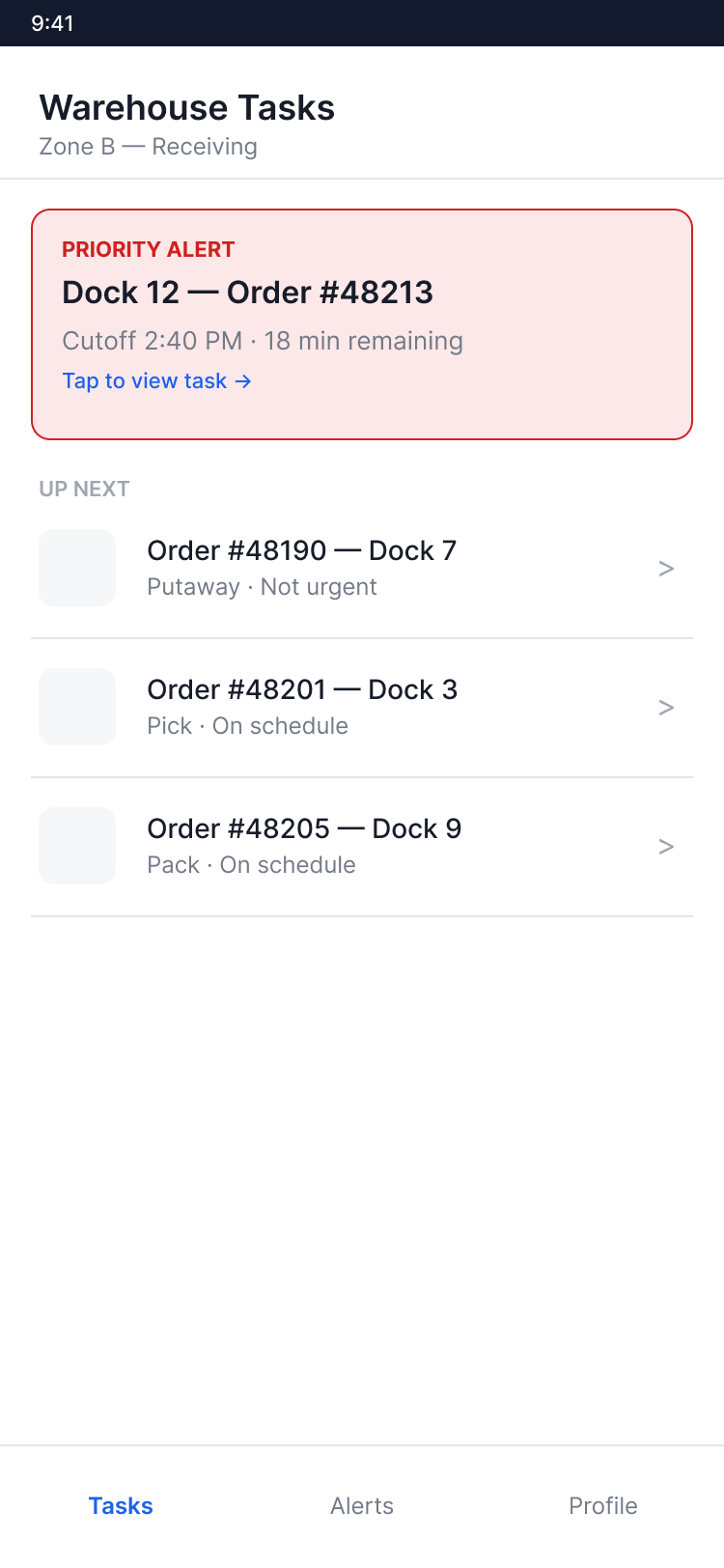
Adjust MOQ or allocation
The Bottom Line
Stockouts used to be treated with one blunt response — more stock — regardless of cause. By diagnosing which of ten root causes is behind each one, the manufacturer can target the fix that actually applies, with a 90-day pilot measuring whether that discipline moves availability from 91% to a 95% target while freeing a projected €6.4M in working capital.

Network-Wide Availability
Extend from priority parts to the full catalog and every site, with availability targets set by part classification, the scoped post-pilot expansion.
Supplier & Inbound Risk
Turn the same supplier, quality, and milestone signals into forward-looking risk alerts, flagging likely failures before they become stockouts.
Working-Capital Optimization
Use the diagnosed causes to right-size safety stock across the network, freeing inventory where it is padding for a problem better solved at its source.