
The distributed accountability problem
In a direct-to-consumer operation, the accountability chain is relatively simple. In marketplace fulfillment, it’s distributed across parties who have different incentives, different systems, and different relationships with the platform.
The driver is contracted. The carrier may be third-party. The buyer and the seller both have incentives to claim. And the data about what happened lives across all of their systems simultaneously.
Traditional LP investigation is built for a simpler model. At marketplace scale — millions of shipments per month, thousands of sellers, complex last-mile networks — the manual process simply cannot keep up.
What actually drives loss in marketplace fulfillment
There are four primary loss categories that compound into platform trust erosion: driver theft and misconduct, staging failures at the fulfillment center, post-delivery claims fraud, and repeat-offender patterns across buyers and drivers.
The last category is the one most platforms are slowest to catch. The same buyer filing non-delivery claims across different sellers over 60 days looks like bad luck per transaction. In aggregate, it is a fraud profile. Connecting that picture requires looking across the entire system — buyer, seller, driver, route, and delivery data simultaneously.
How Beamup approaches this
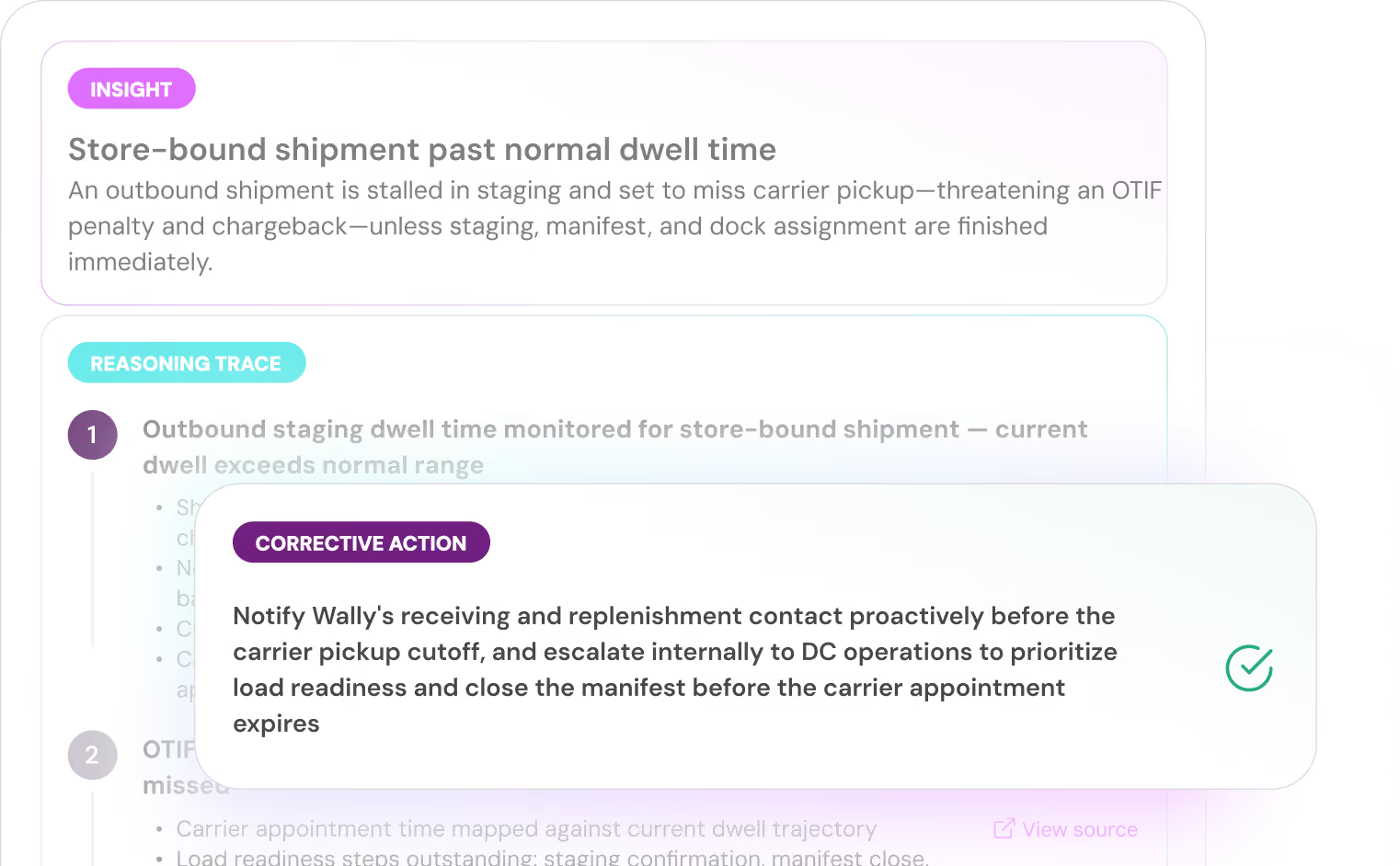
Beamup’s AI agents combine GPS signals, scan event sequences, mobile app signatures, route behavior, fulfillment center records, complaint patterns, and repeat-offender analytics into a single continuous monitoring layer.
When a risk pattern emerges — whether it’s a driver route anomaly, a staging-to-load discrepancy, or a buyer fraud cluster — the agent surfaces a ranked, evidence-backed finding automatically, with the source data attached.
No manual cross-referencing. No lag between when the pattern forms and when someone acts on it.
The business case
Marketplace operators deploying Beamup report measurable improvements in delivery confirmation confidence, concession abuse reduction, and fraud incident rates. The improvement does not require additional headcount or new carrier contracts. It comes from connecting data that already existed across the delivery journey.
If this is a challenge your operation is facing, we’d be glad to talk through what it looks like at your scale. Reach out at sales@beamup.ai.