

The Cost of Inefficiency in Dock-to-Stock Operations
Inefficient dock-to-stock processes impact:
- Operational Costs: Prolonged handling times and storage bottlenecks increase labor and warehouse costs.
- Customer Satisfaction: Delayed inventory availability can result in stockouts and missed sales opportunities.
- Gross Margins: Extended cycle times create ripple effects throughout the supply chain, eroding profitability.
Without full visibility, businesses often struggle to pinpoint where inefficiencies lie—whether it’s unloading delays, manual data entry errors, or mismanagement of staging areas.
How BeamUP Transforms Dock-to-Stock Processes
BeamUP leverages advanced AI and machine learning to deliver actionable insights that streamline dock-to-stock operations. Here’s how:
- Full Data Monitoring
BeamUP continuously monitors millions of data points across supply chain touchpoints, from receiving docks to inventory placement. By integrating with existing systems, BeamUP provides a centralized, real-time view of operations. - Identifying Bottlenecks and Anomalies
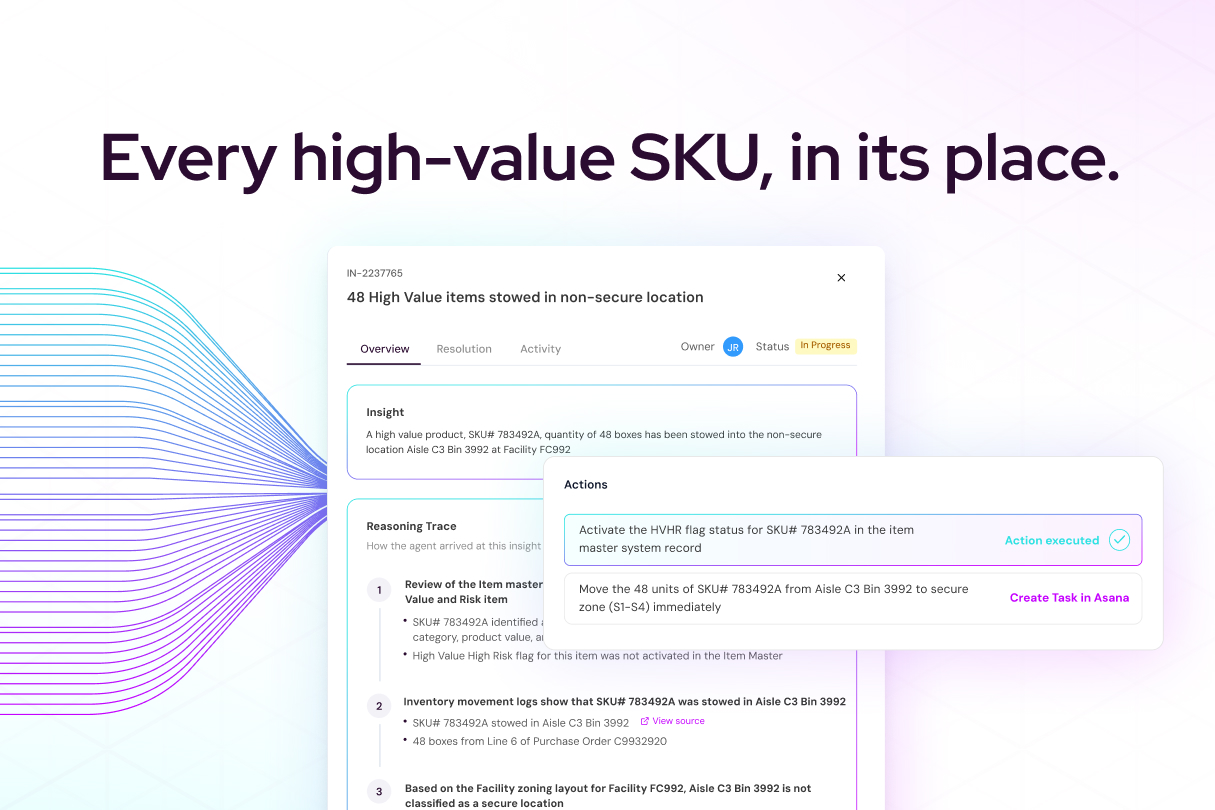
Using AI, BeamUP detects anomalies—such as delays in unloading, scanning errors, or staging mismanagement—that disrupt dock-to-stock workflows. These insights allow teams to address problems before they escalate. - Optimized Resource Allocation
BeamUP analyzes labor productivity and equipment usage to optimize workforce deployment and ensure resources are aligned with demand. This reduces idle time and improves throughput. - Actionable Recommendations
The platform generates specific recommendations, such as adjusting scheduling, improving dock layout, or enhancing staff training. These insights are tailored to each facility, driving immediate and measurable improvements.
Traditional dock-to-stock processes often rely on manual reporting and post-event analysis, which limits an organization’s ability to respond quickly to disruptions. BeamUP changes the game by shifting operations from reactive to proactive. Continuous monitoring and predictive analytics empower businesses to anticipate challenges and maintain smooth, efficient workflows.
For logistics providers, retailers, and manufacturers, dock-to-stock efficiency isn’t just a KPI—it’s a competitive advantage. Faster dock-to-stock times translate to:
- Improved inventory accuracy
- Faster time-to-market
- Stronger customer relationships
BeamUP helps businesses unlock these benefits while reducing costs and mitigating risks.
Ready to Transform Your Operations?
BeamUP isn’t just a tool—it’s your AI-powered partner for supply chain excellence. By analyzing and optimizing dock-to-stock times, we help enterprises protect their margins, enhance efficiency, and build resilience.